
MERV Ratings Compared: Which Filter Do You Need?
MERV, the Minimum Efficiency Reporting Value from the ASHRAE 52.2 test standard, tells you how well a filter captures particles of different sizes. Higher is finer, but your system must be able to move air through it.
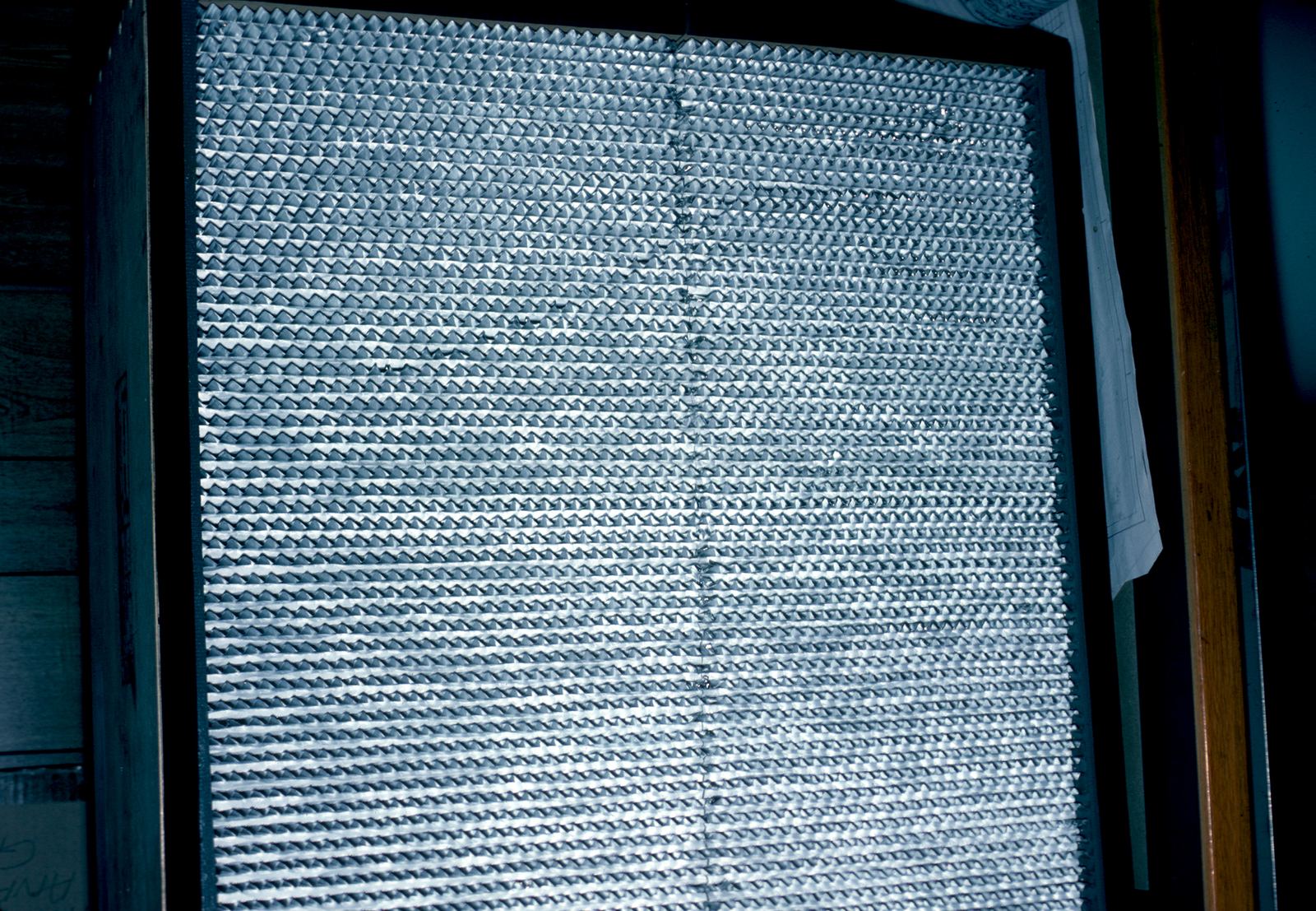
Pleated filter media up close: Livestock Industries, CSIRO, CC BY 3.0
| Rating | Captures well | Typical use |
|---|---|---|
| MERV 1 to 4 | Large dust and lint; little effect on fine particles | Basic equipment protection |
| MERV 5 to 8 | Mold spores, dust mite debris, larger pollen | Standard home filters |
| MERV 9 to 12 | Finer dust and more pollen; some fine particles | Better home filtration |
| MERV 13 to 16 | Most fine particles, including much smoke-sized PM | Recommended for smoke events if the system can handle it |
| HEPA (not on MERV scale) | At least 99.97% of 0.3 micron particles (US DOE standard) | Portable air cleaners, special systems |
Can my system handle MERV 13?
Higher MERV filters can restrict airflow in some systems, especially older ones or those with small return grilles. Look for filters with deeper pleats (4 or 5 inch media cabinets help), check your manual and ask a technician. Watch for warning signs such as rooms not cooling or a whistling return.
The Clear Air Cleaning collection
Tees and hoodies in the Clear Air Cleaning colors, printed to order in the USA. Use code VIP15 from the newsletter for 15% off your first order.





Facts on this page were checked against these sources (updated Oct 12, 2026). Spot an error? Email hello@fireempireshop.com.