
Home Air in 10 Numbers
New to HVAC? These are the numbers worth remembering. Each one links to a deeper page on this site and to the agency or standard behind it.
Clear Air Cleaning is a fact library. We do not sell services, and we follow the EPA on health claims: duct cleaning has never been shown to prevent health problems.
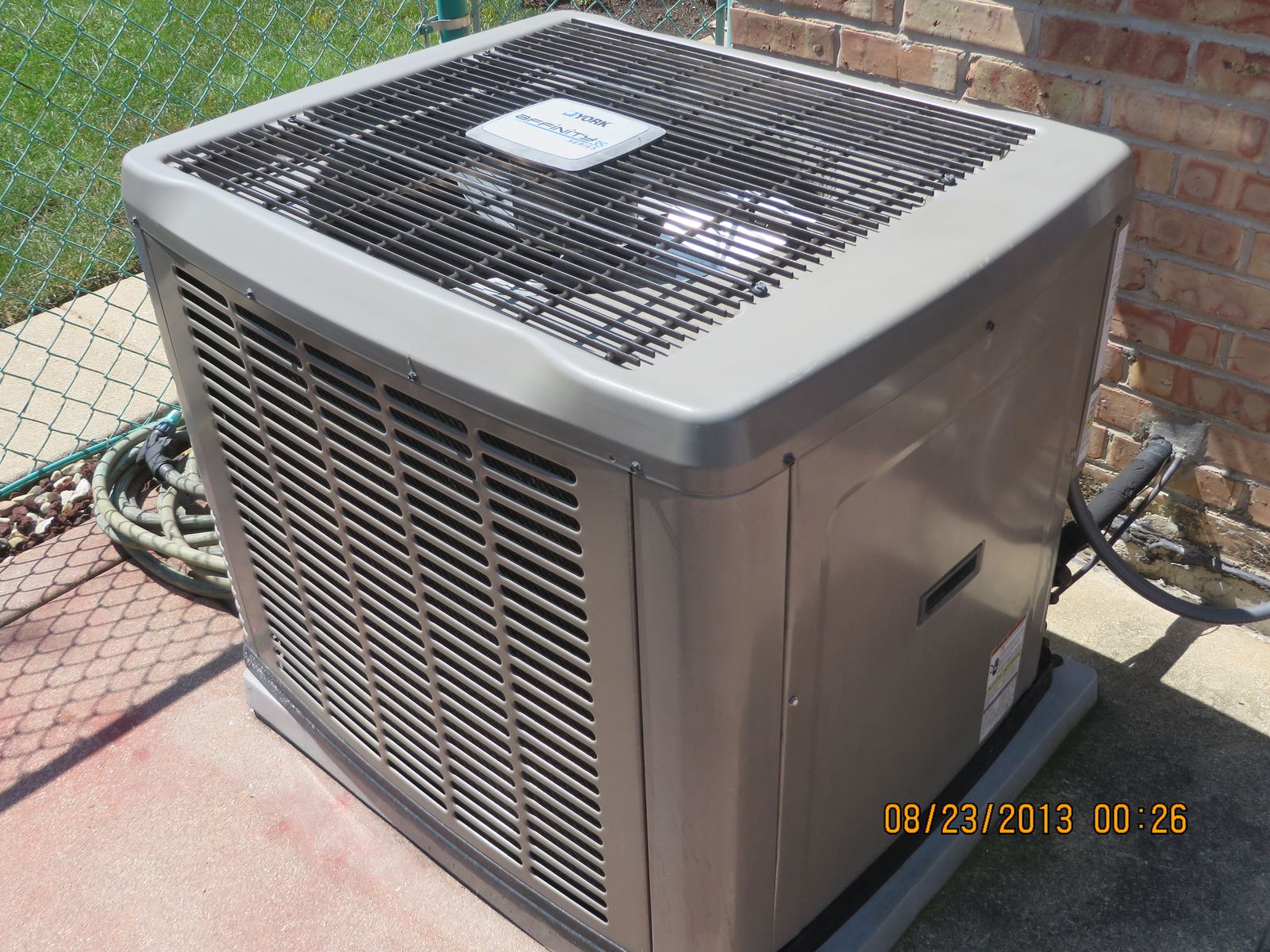
The outdoor condenser: H Padleckas, CC BY-SA 3.0

The key numbers
| Number | What it means | Source |
|---|---|---|
| About 90% | Share of time Americans spend indoors | EPA |
| 2 to 5 times | How much higher some pollutants can be indoors than outdoors | EPA |
| Nearly half | Share of home energy used for heating and cooling | ENERGY STAR |
| Every month | How often to check your HVAC filter | ENERGY STAR |
| 3 months | Longest you should go before changing a filter | ENERGY STAR |
| MERV 13 | Filter rating EPA suggests if your system can handle it | EPA |
| 99.97% | Share of 0.3 micron particles a true HEPA filter must catch | US DOE standard |
| 20 to 30% | Air lost from a typical home's duct system through leaks | ENERGY STAR |
| 30 to 50% | Ideal indoor relative humidity range | EPA |
| 4 pCi/L | Radon level at which EPA recommends fixing a home | EPA |
A short history of cooling
- Ancient times
Windcatchers
Towers catch breezes and channel them into buildings in hot, dry regions.
Source: en.wikipedia.org - 1851
Gorrie's ice machine patent
Florida physician John Gorrie patents a machine that makes ice to cool rooms.
Source: en.wikipedia.org - 1902
Carrier's humidity control
Willis Carrier designs a system to control temperature and humidity at a Brooklyn printing plant.
Source: en.wikipedia.org - 1906
A name for it
Stuart Cramer popularizes the term air conditioning; Carrier receives his Apparatus for Treating Air patent.
Source: en.wikipedia.org - 1987
Montreal Protocol
An international agreement begins phasing out ozone-depleting refrigerants such as CFCs.
Source: en.wikipedia.org - 2020
R-22 production ends in the US
Production and import of the long-time home refrigerant R-22 stops.
Source: epa.gov
- US EPA: Report on the Environment, Indoor Air Quality
- ENERGY STAR: Heat and Cool Efficiently
- ENERGY STAR: Duct Sealing
- US EPA: What is a MERV rating?
- US EPA: A Brief Guide to Mold, Moisture and Your Home
- US EPA: Health Risk of Radon
- Wikipedia: HEPA
Facts on this page were checked against these sources (updated Oct 9, 2026). Spot an error? Email hello@fireempireshop.com.