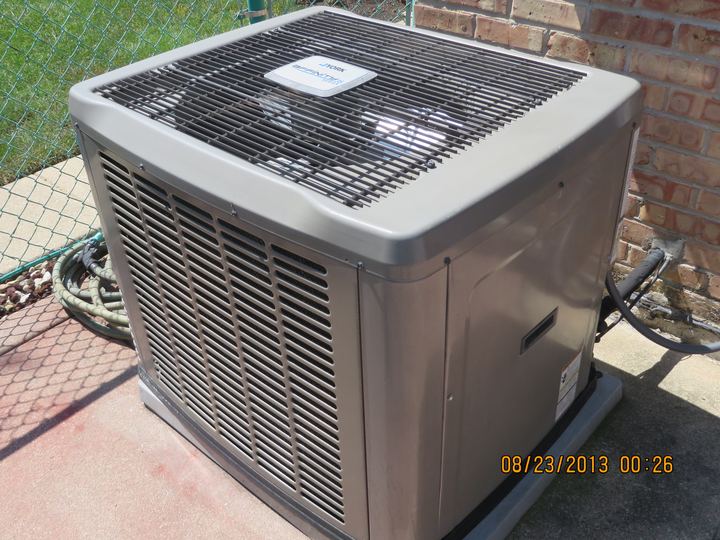
Refrigerants: From CFCs to Today
Why the fluid in your AC keeps changing. Refrigerants moved from CFCs to R-22 to R-410A and now lower impact choices like R-454B and R-32. Why they changed and what it means for homeowners.
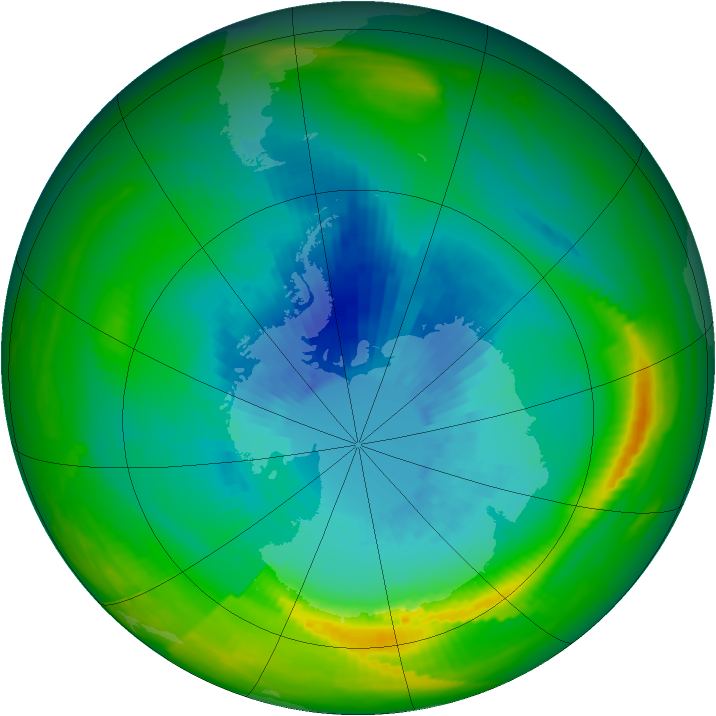
Antarctic ozone in 1979: NOAASatellites, Public domain
Why the fluid matters
The refrigerant is the working fluid inside an air conditioner or heat pump. A good refrigerant boils at the right temperatures, carries plenty of heat and is safe to handle. Early in the twentieth century, refrigerants were often toxic or flammable, so chlorofluorocarbons, or CFCs, were welcomed as safe alternatives.
In the 1970s and 1980s scientists found that chlorine from CFCs was destroying the ozone layer high in the atmosphere, which shields the planet from ultraviolet light.
The ozone hole
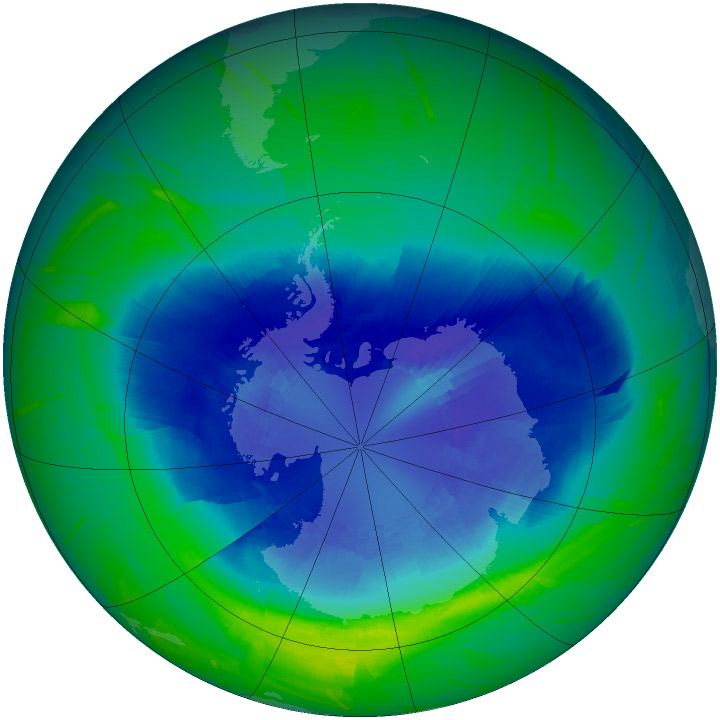
The discovery of a seasonal ozone hole over Antarctica in the 1980s led to the 1987 Montreal Protocol, an international agreement to phase out ozone-depleting substances. CFCs were phased out first. R-22, an HCFC that does less damage, became the standard home air conditioning refrigerant for years.
In the US, new air conditioners stopped using R-22 in 2010, and production and import of R-22 ended in 2020. Older systems still running on it rely on recycled supplies.
The climate question
R-410A replaced R-22 in new systems. It does not harm the ozone layer, but it is a potent greenhouse gas if it leaks, with a global warming potential roughly 2,000 times that of carbon dioxide.
Under EPA rules, new US home air conditioners and heat pumps have been moving since 2025 to refrigerants with a much lower global warming potential. Many use R-454B or R-32, which are classed as mildly flammable, so equipment includes extra safety features.
What it means at home
Your existing system can keep running on its original refrigerant, and it can be repaired. Refrigerants cannot be mixed, so a technician must use the type on the unit's nameplate.
In the US, technicians who work with refrigerants must be EPA certified, and venting refrigerant on purpose is illegal. A system that keeps needing refrigerant has a leak that should be found and fixed.
Natural refrigerants
Not all refrigerants are synthetic. Ammonia has been used in large industrial refrigeration for well over a century. Carbon dioxide, called R-744, is used in some heat pump water heaters and commercial systems, and propane, called R-290, is used in some small appliances such as certain refrigerators and room units.
Each refrigerant has trade-offs for pressure, efficiency, flammability and toxicity, which is why equipment is designed around one specific refrigerant and must never be topped up with another.
- US EPA: Phasing Out HCFC Refrigerants to Protect the Ozone Layer
- US EPA: Technology Transitions Program
- Wikipedia: Refrigerant
Facts on this page were checked against these sources.
- Antarctic ozone in 1979: NOAASatellites, Public domain
- The ozone hole in 2010: NASA Goddard Space Flight Center from Greenbelt, MD, USA, Public domain
Text written by Clear Air Cleaning.
← Cooling Before Air ConditioningThermostats and Smart Settings →