Thermostats and Smart Settings
Small settings, real savings. DOE says turning your thermostat back 7 to 10 degrees F for 8 hours a day can save up to 10 percent a year on heating and cooling. How thermostats work.
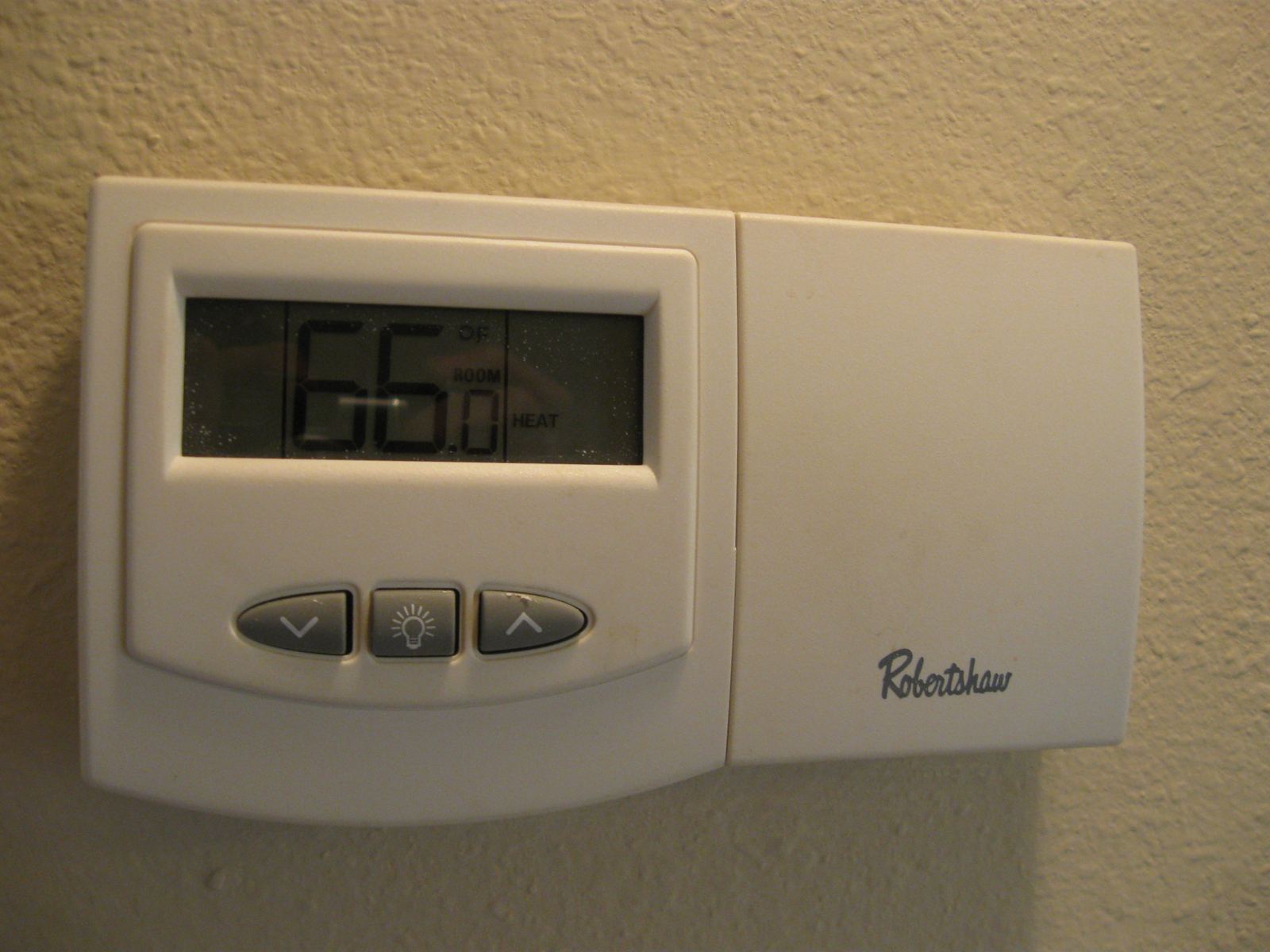
A digital thermostat: Ente75, CC0
What a thermostat does
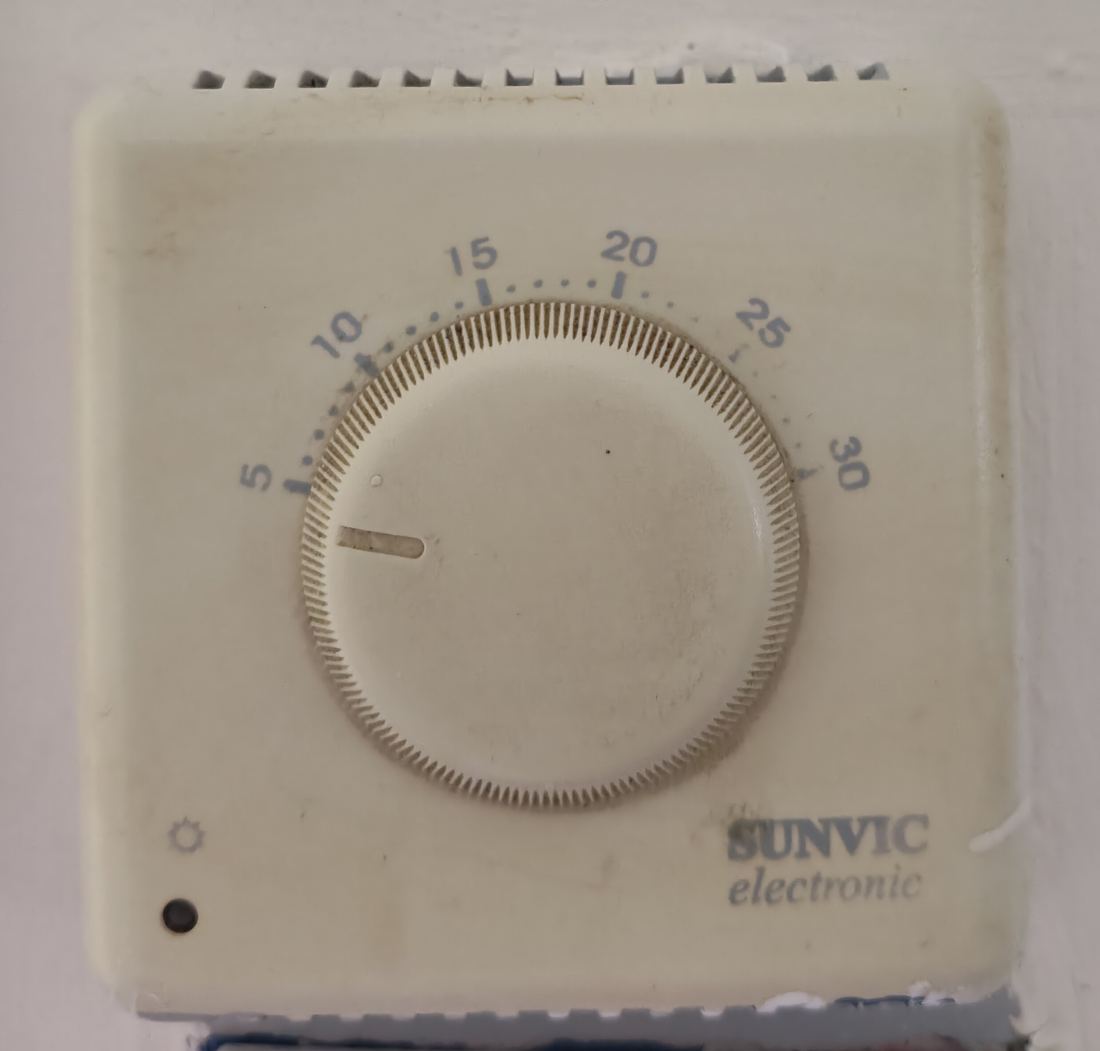
A thermostat measures room temperature and switches the heating or cooling on and off to hold the setting. Old mechanical thermostats used a coiled metal strip that bent with temperature. Digital and smart thermostats use electronic sensors and can follow schedules.
Where it is mounted matters. A thermostat in direct sunlight, near a supply vent, a lamp or a drafty door will read the wrong temperature and run the system at the wrong times.
The setback rule
The US Department of Energy says you can save as much as 10 percent a year on heating and cooling by turning your thermostat back 7 to 10 degrees Fahrenheit from its normal setting for 8 hours a day, such as while you sleep or are away.
The idea that a home uses more energy warming back up than it saved is a myth for most systems. The lower the inside temperature, the slower the home loses heat to the outside.
Heat pumps are different
Heat pumps can be the exception. A large setback followed by a quick recovery may trigger electric backup heat, which costs more to run. Programmable thermostats designed for heat pumps manage recovery gradually, and smaller setbacks often work best.
If you have a heat pump, check the thermostat's settings for an adaptive recovery or heat pump mode.
Programmable and smart
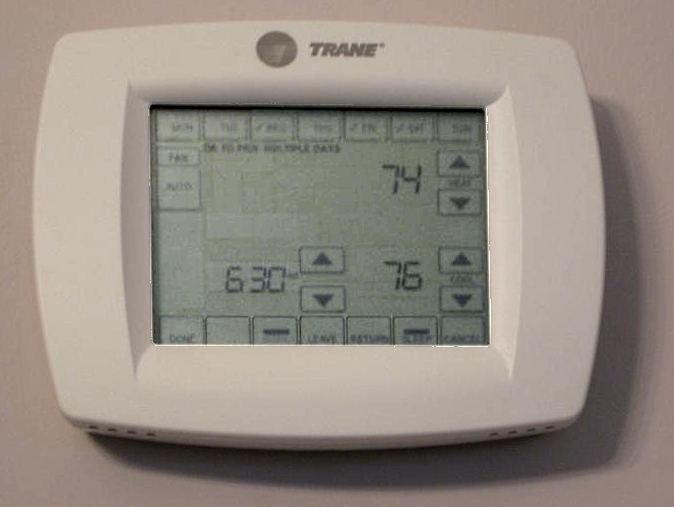
Programmable thermostats follow a schedule you set. Smart thermostats add Wi-Fi control, can learn routines and can report run times and filter reminders. ENERGY STAR certifies smart thermostats that show savings in real homes.
Leaving the fan on Auto rather than On lets it run only when heating or cooling, which uses less electricity. Some people run the fan longer for more filtration, which is a trade-off worth knowing about.
Zoning and sensors
Some homes have zoning, where motorized dampers in the ducts open and close to send air only where a zone thermostat calls for it. This can help in houses with rooms that heat and cool very differently, such as a sunny upper floor.
Many smart thermostats also support remote room sensors that average temperatures across rooms or focus on the room where people are. Placing a sensor away from windows and heat sources makes a big difference to comfort.
- US DOE Energy Saver: Programmable Thermostats (archived)
- ENERGY STAR: Smart Thermostats
- Wikipedia: Thermostat
Facts on this page were checked against these sources.
- A digital thermostat: Ente75, CC0
- A classic dial thermostat: SpicyPhoto, CC0
- A programmable thermostat: Flarn2006, CC BY-SA 3.0
Text written by Clear Air Cleaning.
← Refrigerants: From CFCs to TodaySeasonal HVAC Care Checklist →